
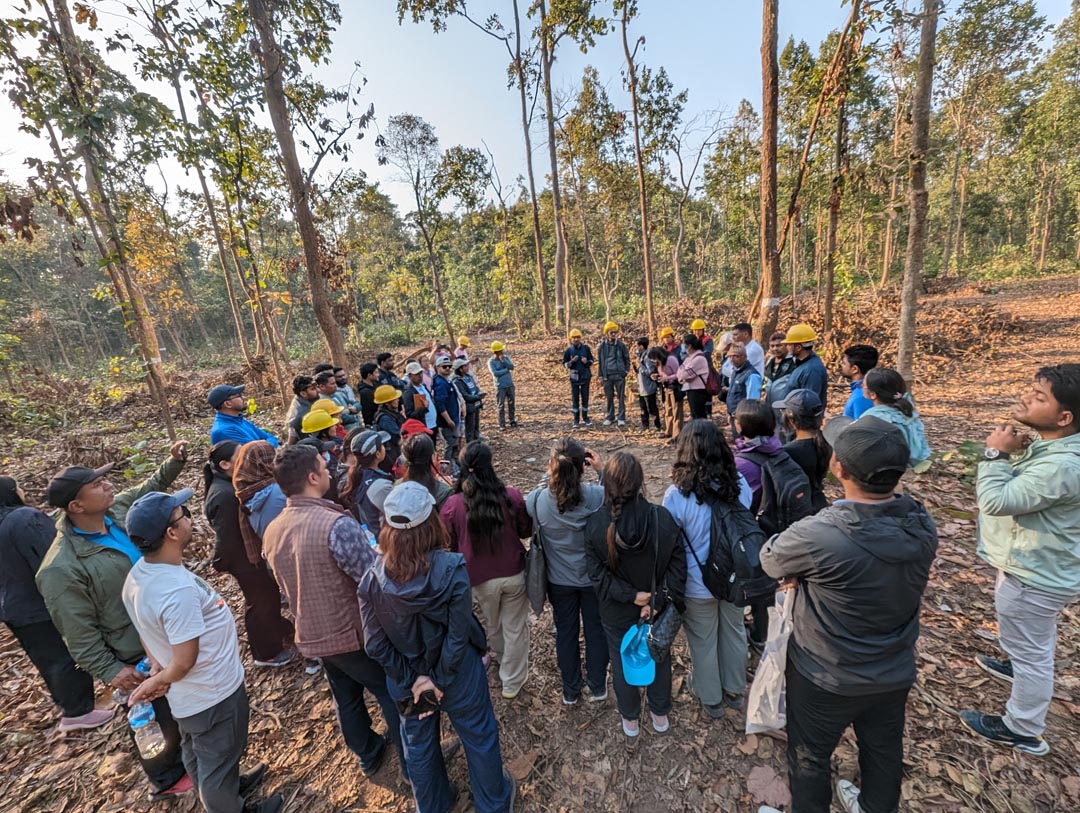
IoF Graduate Seminar
Forestry plays a crucial role in maintaining the planet’s ecological balance, enhancing biodiversity conservation, increasing carbon stock, and the provisioning of ecosystem services. However, the growing demand for natural resources due to increased population and the pressures of economic development putting forests at a risk of degradation and deforestation. It is essential to adopt an appropriate approach that integrates conservation efforts with sustainable development practices to secure the future of forestry. This does not mean only to protect forest ecosystems but ensuring the extraction of forest resources to maintain their regenerative capacities. Effective policies and management strategies must balance the ecological integrity of forests with the economic needs of local communities and country.
In addition, it is also essential to consider that forestry activities must contribute to the well-being of the human populations. This requires an inclusive approach considering the social dimensions of forestry, including the rights and concerns of indigenous peoples and local communities. Participatory governance, equitable resource sharing, and the promotion of alternative livelihoods are key elements in ensuring that forestry practices contribute to uplift livelihoods of forest dependent communities and social equity. Therefore, forestry can serve as a model for sustainable resource management, by aligning conservation goals with human development objectives, that meets the needs of both present and future generations.
In this context, Institute of Forestry, Tribhuvan University- a leading institution of excellence in forestry education, research, and sustainable management of natural resources in Nepal- is organizing the first annual graduate seminar focusing on “Forestry for the Future: Balancing Conservation, Development and Human Well-Being” to share the knowledge generated by its graduates, faculties, alumni and partners.
In addition, it is also essential to consider that forestry activities must contribute to the well-being of the human populations. This requires an inclusive approach considering the social dimensions of forestry, including the rights and concerns of indigenous peoples and local communities. Participatory governance, equitable resource sharing, and the promotion of alternative livelihoods are key elements in ensuring that forestry practices contribute to uplift livelihoods of forest dependent communities and social equity. Therefore, forestry can serve as a model for sustainable resource management, by aligning conservation goals with human development objectives, that meets the needs of both present and future generations.
In this context, Institute of Forestry, Tribhuvan University- a leading institution of excellence in forestry education, research, and sustainable management of natural resources in Nepal- is organizing the first annual graduate seminar focusing on “Forestry for the Future: Balancing Conservation, Development and Human Well-Being” to share the knowledge generated by its graduates, faculties, alumni and partners.
Themes
Seminar Location and Important Dates
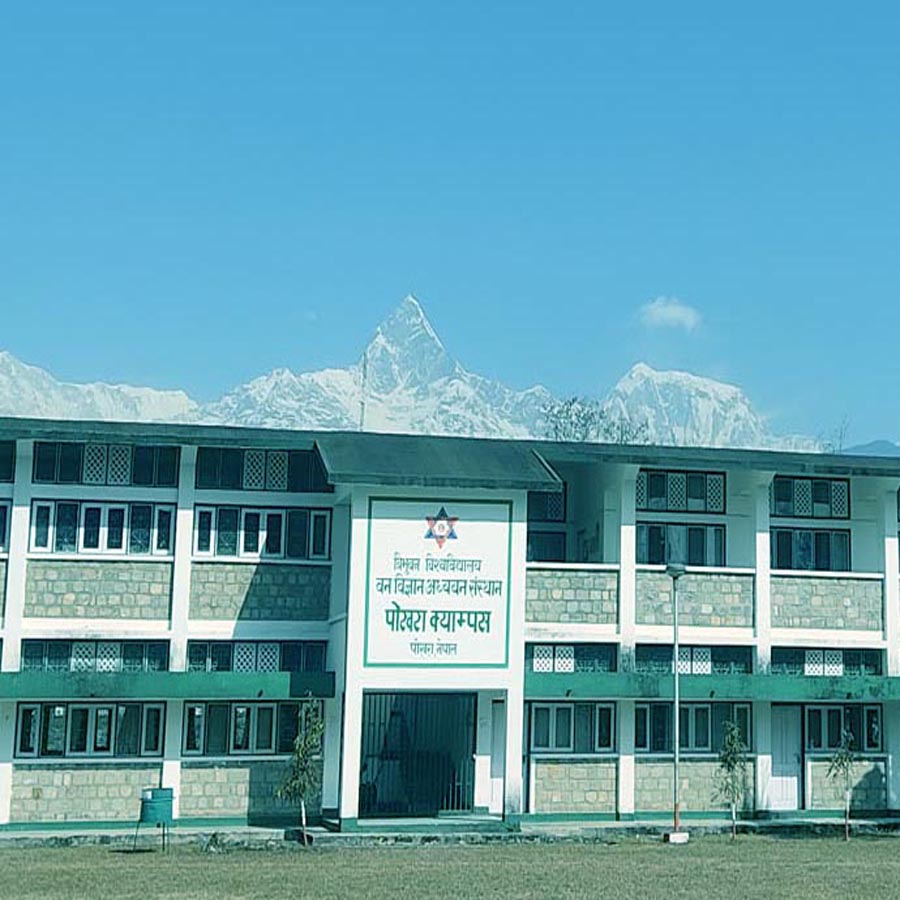
Seminar
Location
Location
Tribhuvan University
Institute of Forestry
Pokhara Campus
Pokhara-15, Hariyokharka
Institute of Forestry
Pokhara Campus
Pokhara-15, Hariyokharka


Confirmation of Acceptance
Confirmation on acceptance of the abstract via mail on 25th of March 2025

Submission of Presentation Slides
Must be submitted before 5th of April 2025 (Poster in the morning of 19th April, 2025)
Guideline for Abstract Submission
Submit your abstract by clicking on registration button on the website. Please make sure that the details included are correct. The organizers will not be responsible for any typos or errors made during the submission.
- Abstract must be limited to 250 words. Include a clear title and 4 to 5 key words.
- Abstracts should be in either word(.doc or .docx) format. In case of more than one abstracts should be submitted separately as a new submission.
- File name of the abstract should be formatted as: Firstname_Lastname_Themeofabstract (e.g. Chris_Lynn_SilvicultureandForestry).
- Submit your abstract before 19th of March 2025
Acceptance or rejection of the abstract will be notified via email.
If you do not hear on the decisions, please contact us at: graduateseminar@iof.tu.edu.np